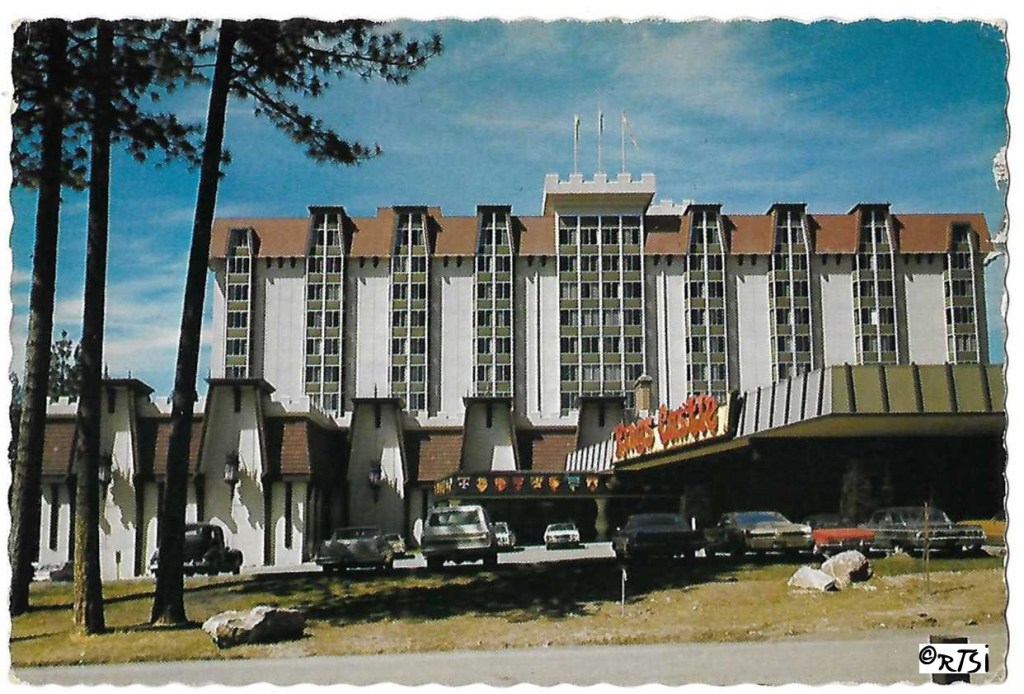
How’s this for a great shot from the early ’70s? This postcard is from Reno Tahoe Specialty, Inc.
Nate Jacobson built the King’s Castle Casino at Incline Village (Lake Tahoe), but first, let’s look at the previous owners and names!
As is often the case at Lake Tahoe, George Whittell is at the heart of stories of Incline Village, even if his part was small. Whittell owned 27 miles of shoreline and built the Lake’s most impressive property, the Thunderbird Lodge (a marvel of construction and opulence).
While Whittell didn’t use all his 40,000 acres of land, he wasn’t often approached about selling any of it. However, in 1958, the Crystal Bay Development Company, headed by Art Wood, convinced Whittell to part with 9,000 acres, which became Incline Village proper.
Oklahoma Partners Had Big Plans
Art Wood and his Crystal Bay Development Company partner Harold Tiller had expansive dreams, including multiple casinos along Lake Shore Drive, golf courses, and a “Sierra Pebble Beach” in a master-planned community. All they needed was more cash after tying up their liquid assets with a bank loan for Whittell’s land, which totaled more than $5 million.
To start, 60% of the lakefront properties went up for sale at $25,000 each, a crazy amount for the early ’60s. Tiller worried the lot prices were unreasonable. Wood said, “No, they are outrageous.” But they sold fast enough to start the Incline Village General Improvement District.
The Boom of 1964/66 and the Lake Casino at Incline Village
The Robert Trent Jones Sr.-designed Incline Village Golf Course opened in 1964 four years later. As Ski Incline was being built, so was the 100-room Sierra Tahoe Hotel. In 1965, Calvin Kovens arranged for an additional 100 rooms and purchased the Sierra Hotel with Teamsters Union pension funds.
Kovens was good with the Union, even though he and Jimmy Hoffa had been convicted for defrauding it of nearly $25. The Nevada Gaming Commission denied him a license to run The Lake Tahoe Hotel and Incline Village Casino, but he was allowed to manage the property. He was the owner, right? Not exactly.
Cash for the loan had to come from daily income, and skim had to go to Chicago out of the count room. And, a dice dealer (always blame the lowest guy on the totem pole!) slipped loaded dice into a craps game that was blowing up (the players were winning big). Kovens lost any chance to get a permanent license, and Art Wood took over the property. He was uneasy with the building loans, and his loss of control over the casino management and its precarious financial footing.

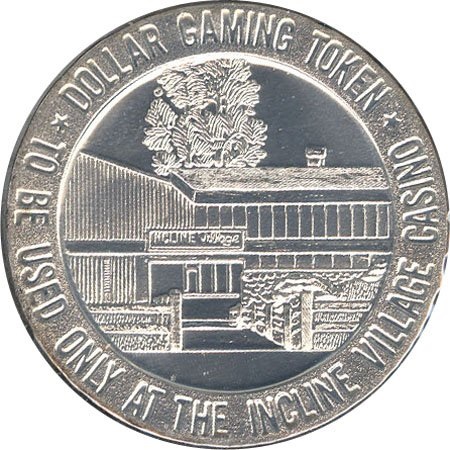
Along Came Nate Jacobson to Incline Village
Art Wood wanted out of running the Incline Village property, and the Outfit was happy to steer a new owner his way. Enter Nate Jacobson!
A former insurance salesman, broker, and owner, Jacobson faced charges from the Securities and Exchange Commission relating to the sale of Caesars Palace in 1969 after several irregularities in accounting and the hiring of Jerome Zarowitz, a mobster with a history of racketeering, sports fixing, and slush-fund building –
to run the Caesar’s Palace casino, Sarno and Jacobson looked either naive or guilty of at the very least, looking the other way as money leaked out of the casino.
To that end, Caesar’s Palace was sold to Lum’s, Inc. Before that happened, Nate had already pulled the ripcord and disengaged from the operation, purchasing the Bonanza casino downtown and setting his sights on Lake Tahoe where he purchased the Incline Village Casino and Lake Tahoe Hotel in 1969.
Nate envisioned his own Camelot-themed resort, and it was soon to be. The Teamsters Union was again the major contributor to the $20 million renovation and building cost, and they expected to be repaid – over, and under the table.

What Jacobson built at Incline Village was complete with medieval castle motif including walls, turrets and an indoor dinner theater named Camelot. Outside, the grounds held a full-size Lady Godiva on a horse and four palace guards. The 11-story King’s Castle opened in June of 1970 with 470 rooms and boasted 22 table games, 300 slot machines, and a small Keno lounge.
His club at the lake ran into issues soon after taking the Teamster’s cash, and they continued as the small casino struggled to get a foothold in a seasonal resort community. When the snow flew, so did most of the tourists. Sure, there were skiers at Incline, but historically at both north and south shores of Lake Tahoe, the skiers were there to ski, not gamble.
Who Ya Gonna Trust?
Unfortunately, real guards inside the casino were not as trustworthy as they might have been. One problem leading to the casino’s closure in 1972 was a general lack of honesty. Workers in several areas of the club were stealing from inside. Two security guards even had keys to the drop boxes from the blackjack tables. When the boxes went to the soft-count room in an elevator, the guards would help themselves to a few hundred dollars each night. They got caught because one of them accidentally took a “fill-slip” along with his nightly cut.
Other problems arrived shortly thereafter when the Keno manager brought grief for Jacobson and his bodyguard when they held him for three hours and grilled him about winning tickets and a plot to set up a phony $25,000 Keno winner. Jacobson and his bodyguard were arrested for kidnapping, although the charges were later dropped.
The casino had excellent gaming volume, and the 800-seat Camelot Room offered great shows starring entertainers like Don Rickles, Buddy Hackett, Ike & Tina Turner, and B.B. King, the money disappeared like ice in a desert. Jacobson filed for bankruptcy in 1972 after agreeing to sell the property to August T. Marra and Dr. Joseph Barkett. There were complications.
When the club closed, 500 workers lost their jobs. The chips from the club went into the hands of several managers, one of whom was supposed to dump them in the lake. He didn’t make it there with all the chips, which is nice for collectors.
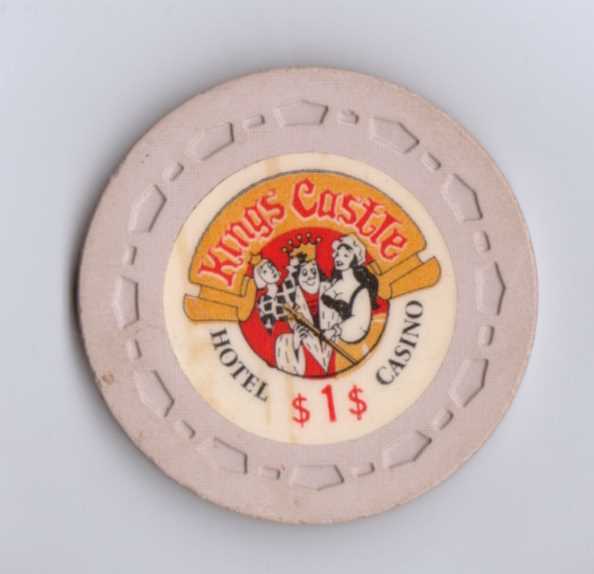
The club reopened in 1974 and lasted less than a year under Judd McIntosh. Later, Jimmie Hume took charge of managing the club for a year or so until it was purchased by Hyatt Hotels in May of 1975.

Hyatt brought in Jack Hardy as general manager, and he oversaw the renovation and reopening of the property. Roy Ritner managed the hotel. Roy’s father owned the Hacienda Casino in North Las Vegas. I often played poker in the casino, often with a dealer named Clay, who I worked with years later.

There have also been several chip design changes.


And unfortunately, the poker room is no long open in what is now called the Grand Lodge Casino.
If you love casino and mob stories, there’s plenty about some shady Lake Tahoe casinos in Vegas and the Mob!



 Nevada Gaming History
Leave a reply to Rolland Kling Cancel reply