There are several great books on Nevada history that you may be interested in. The history of the state doesn’t begin with Mega Resorts in Las Vegas, the laws that led to Nevada’s open gaming in 1931, or even the discovery of the Comstock Lode of silver ore on the eastern slope of Mount Davidson in the Virginia Range in Virginia City back in 1859. Of course it doesn’t.
But we’ll start with a book by Al W. Moe that offers a precursor to gaming in Nevada and tells the story of Virginia City, Reno, and Las Vegas growth, while including major mining towns like Goldfield, Tonopah, and even the beautiful vacation spot of Lake Tahoe, before spilling the beans on what gaming brought. That book is Nevada’s Golden Age of Nevada.
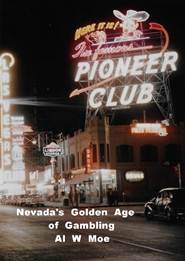
As you can see from the cover, photos are worth a thousand words. And the book includes photos of locations, gaming pioneers, and casinos that dominated Nevada’s rich gaming lore during the early years.
The book features chapters on Las Vegas, Reno, Lake Tahoe, Carson City, Winnemucca, Hawthorne, and plenty more. Each has archival photos (nearly 100) from 1931 to 1981. Gaming greats include early club owners Harold and Pappy Smith, Bill Harrah, Warren Nelson, Bugsy Siegel, Major Riddel, Anthony Manzo, “Pick” Hobson, Karl Berge, Nick Abelman, and dozens more. And then there’s Meyer Lansky, Lucky Luciano, Tony Accardo, and many more from the Mob and organized crime.
Factual accounts of politics, ownership, skimming, and daily operations explain how early gaming started, grew, and why some casinos flourished while others failed. Your first step into Nevada history and the wild step the state made, allowing casinos and the Mob into the counting room, begins with Nevada’s Golden Age of Gambling. This book is an Amazon Best Seller with more than 1500 great reviews.
Nevada: A History of the Silver State
Michael S. Green, a leading Nevada historian, provides a comprehensive and nuanced survey of the Silver State’s rich and complex past. His work spans from the arrival of early European explorers to the predominance of mining during the 1800s, the rise of world-class tourism in the twentieth century, and the more recent efforts to diversify Nevada’s economy beyond its historical reliance on a single dominant industry.
Central to Green’s analysis is the theme of luck, which plays a significant role throughout Nevada’s history. The early miners and gamblers who ventured into the state epitomized the spirit of chance, betting not only their fortunes but also their futures on the inherent unpredictability of luck. This foundational belief in chance has permeated Nevada’s identity, creating a culture particularly evident today in the tourism economy, where gaming remains the largest and most lucrative sector. This persistent faith in luck reflects a broader cultural narrative that has shaped the state’s development and continues to influence its economic landscape. And the author’s belief in the culture makes Nevada – A History of the Silver State a great read!
In his examination, Green delves deeply into the limitations of this “one industry” economic model, which has historically been tied to resource extraction—first through mining and, more recently, through gaming. He critically addresses the sustainability of such a framework, questioning whether the current reliance on a singular industry can be adequately maintained in the face of changing economic conditions and environmental concerns. Furthermore, he explores the delicate balance between exploiting the land for growth while acknowledging the overuse and depletion of Nevada’s rich natural resources.
Throughout his narrative, Green also touches on other significant themes, such as the socio-political dynamics that have shaped Nevada. He illuminates the historical dominance of certain regions over others and sheds light on the complex interactions between political forces, corruption, and the populace’s often tumultuous relationship with the federal government. This multifaceted approach not only enriches the historical account but also offers critical insights into how these themes have influenced the trajectory of Nevada from a largely uncharted territory to a vibrant, multifarious state.
The depth and breadth of Green’s work make it an essential read for scholars, students, and history enthusiasts alike, particularly those with a keen interest in understanding Nevada’s unique historical narrative and its ongoing evolution in the face of modern challenges.
Uncovering Nevada’s Past
Nevada’s relatively brief history has been nonetheless remarkably eventful. From the activities of the first Euro-American explorers to the booms and busts of the mining industry, from the struggles and artistry of the Native Americans to the establishment of liberal divorce laws and such unique industries as legalized gambling and prostitution, as well as the impacts of Cold War atomic tests and the civil rights movement, Nevada has played an interesting role in the nation’s development while following its own ruggedly independent path.
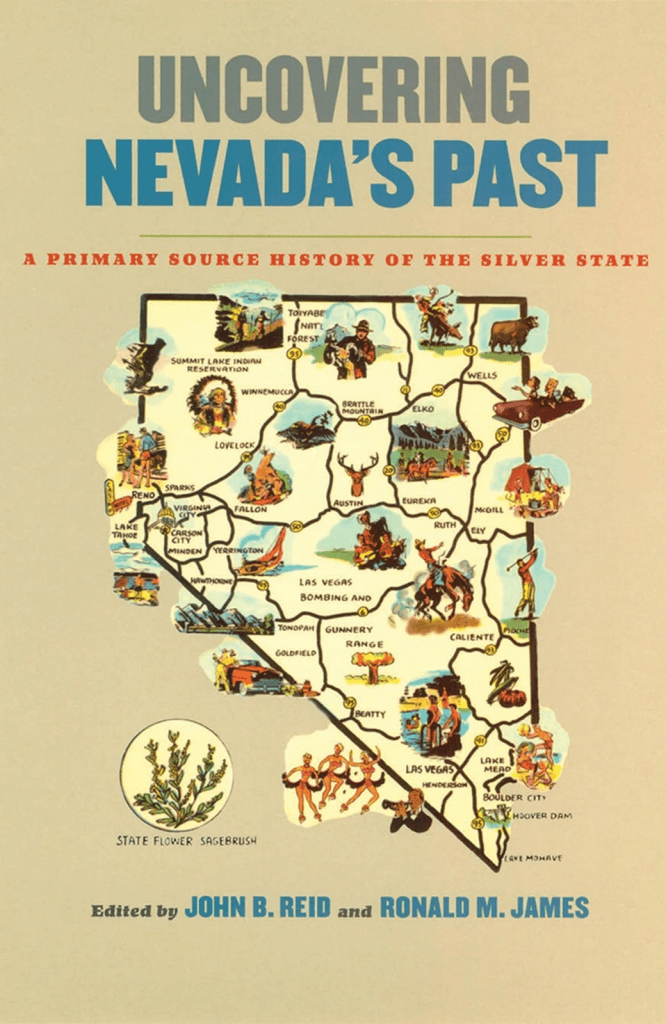
In Uncovering Nevada’s Past, historians John B. Reid and Ronald M. James have meticulously collected more than fifty major documents and visual images—many of which are published for the first time—that define Nevada’s colorful and complex evolution over the years. This extensive compilation features the evocative words of literary luminaries such as Mark Twain, who captured the spirit of the West with his narratives, and Sarah Winnemucca, a Native American activist whose writings provide crucial insights into the indigenous perspective of the era. Other significant texts include anonymous newspaper articles that offer commentary on the socio-political climate of the times, public documents such as Abraham Lincoln’s proclamation of Nevada statehood, as well as probate records pertaining to the tragic life of Julia Bulette, a murdered Virginia City prostitute.
Moreover, the book includes personal letters that reveal the intimate thoughts and struggles of individuals in various stages of Nevada’s development, political speeches that convey the ambitions and disagreements that shaped the state’s governance, and personal accounts depicting life during critical events, such as the construction of Hoover Dam, the vibrant atmosphere within mining boomtowns, and the harsh realities of racial segregation in Las Vegas. The collection also delves into the political careers of noteworthy figures and the significant projects like atomic testing that affected not just Nevada, but the nation as a whole.
Visually, Uncovering Nevada’s Past encompasses a diverse array of images, including photographs of significant Nevada architecture that illustrate the evolution of urbanity, the masterpieces of renowned Paiute basketmaker Dat-so-la-lee showcasing Native American artistry, and tree carvings by Basque sheepherders that highlight the multicultural tapestry of the region. Additionally, the promotional materials for tourism reflect the increasingly popular draw of Nevada as a destination for travelers seeking entertainment and adventure.
This rich collection spans from the earliest descriptions of Nevada to the more contemporary debates surrounding pivotal issues such as Yucca Mountain. The volume editors have thoughtfully provided an introduction and headnotes that situate the documents within their broader historical and social context, enhancing the reader’s understanding. Uncovering Nevada’s Past stands as a vital, enlightening record of Nevada’s history—in the very words of those who experienced it firsthand. This engaging and lively anthology not only seeks to inform but entertains, ensuring that the complexities and nuances of Nevada’s heritage are accessible to a wider audience. Readers are invited to journey through the past as they engage with the voices that have contributed to the rich narrative of this unique state.
Nevada Ghost Towns from Stanley Paher
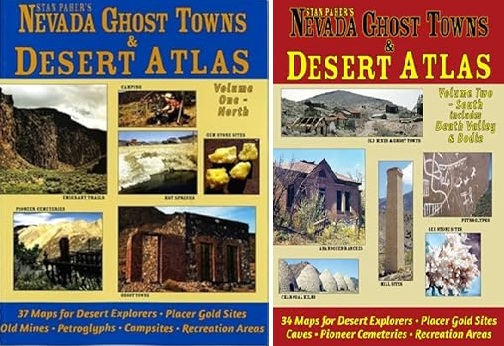
If you are traveling in Nevada and looking to relive some of the historical sites and ghost towns, there’s nothing better than these two books by Stan Paher. These meticulously researched volumes offer an unparalleled glimpse into the rich tapestry of Nevada’s past, making them essential companions for both casual tourists and history enthusiasts alike.
I loved his first book from 1970, Nevada Ghost Towns and Mining Camps, which is huge, with hundreds of photos in a 490-page hardbound book measuring 8.75 x 11.25 inches (it weighs five pounds). The depth of information and the visual documentation provide a comprehensive overview of the ghost towns that once thrived in this arid landscape, from the bustling mining camps to the eerie remnants of once-thriving communities.
However, because the earlier book is half a century old, the two newer books are better if you are exploring desert sights, with dozens of maps to keep you from getting lost. These maps emphasize the remote nature of many destinations and help navigate the sometimes confusing terrain of Nevada’s backcountry, which is characterized by vast stretches of wilderness.
Volume One is dedicated to the Northern part of the state, with the state roughly cut in half by US Route 50 – famously known as the loneliest road in America – stretching 300 miles through the Great Basin Desert. This iconic road showcases rugged beauty and offers a unique opportunity to disconnect from modern distractions. Bring water, snacks, and, of course, the books themselves. Your GPS may not work, especially in remote areas, where the solitude of the desert amplifies the need for traditional navigation tools.
Silver and gold dreams turned Nevada into the largest claim-staking state in the nation for decades, and Stanley tells compelling stories about hundreds of the 800 known ghost towns in his three books. Each story is not merely a recounting of events; they weave together fascinating narratives of the people who lived there, their challenges, and the dreams that led them to these unforgiving landscapes.
His stories are fun, informative, and factual. The vibrancy of his writing brings the history alive, making readers feel as though they are traveling alongside the pioneers and prospectors who sought fortune in the vast desert expanses. The photos are phenomenal, capturing the stark beauty of Nevada’s ghost towns and the unique features of its natural landscape.
Volume Two covers the southern part of Nevada, and while the two newer books total less than half the pages of his first, they serve a great purpose for those thirsty for knowledge and directions. Each volume is crafted with care to ensure that readers can easily navigate the historical and geographical richness of Nevada. These books are not just guides; they are invitations to explore the hidden gems of the desert.
These are well-researched guides to more than 2000 desert destinations in Nevada’s scenic backcountry. With 60+ new color maps for desert explorers and hundreds of vintage photos, you can visit and learn about historic places, natural features, placer gold sites, campgrounds, gemstone sites, caves, hot springs, and recreation areas. This extensive coverage makes these books an invaluable resource for anyone looking to immerse themselves in the unique history and beauty of Nevada’s desert landscapes. Whether you’re planning a road trip, a hiking adventure, or a deep dive into the state’s rich past, Paher’s books are the perfect companions to ensure a rewarding and enriching experience.
 Nevada Gaming History